
Can a magic hen unite two strangers from opposite countries?

Logline
In a tense borderland, a desperate Bangladeshi boy and a struggling Indian girl clash over a mysterious hen
believed to lay golden eggs, each hoping it can save their broken families.
Genre
Magic Realism Social Drama
Location
India - Bangladesh Border
Duration
120 minutes
Language
Bengali

'Shonali' is hope in a world turning colder.
It’s topical, set in a post-political crisis borderland (2024), but it avoids taking sides.
It uses satire and innocence, not violence or bitterness.
It features a golden egg-laying hen, a fable like symbolic narrative hook.
It’s told from the POV of the powerless, a poor Bangladeshi orphan boy and a tribal Indian girl.
It ends not in conflict, but with an act of quiet, shared hope.
Why this film?
At its heart, Shonali is not about politics, war, or borders. It’s about people. It’s about hope, connection, and childhood dreams in a world turning colder. The golden hen in the story is a metaphor. Wherever there is happiness, warmth, or peace, she lays a golden egg. When there’s despair, she flies away. This simple metaphor drives the whole film.

SYNOPSIS
2024 - 2026, India - Bangladesh Border
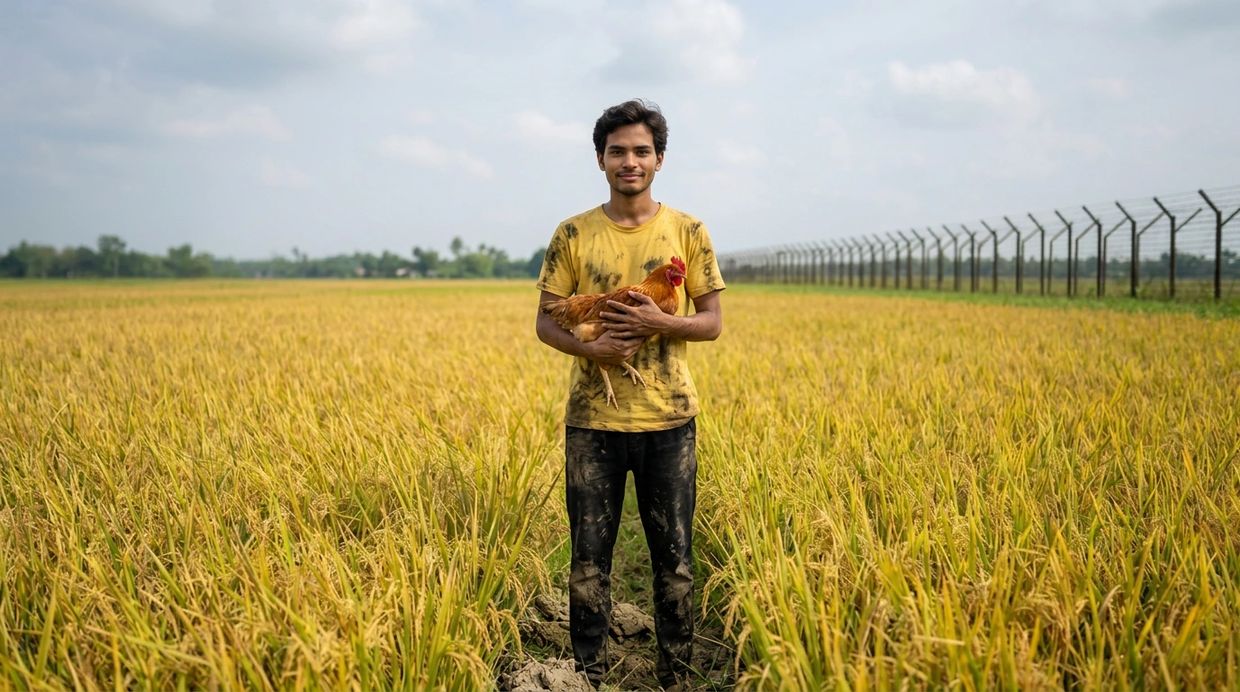
Emu (23) lives with his younger sister Joya(19) in a small village on the India- Bangladesh border. They are orphans, surviving with very little. Their only steady income is from one cow. Since childhood, Emu has believed his grandmother’s story that their hen, Shonali, will one day lay a golden egg, but only when she is truly happy. Every morning, the siblings try to make her happy, but nothing ever happens. Still, Emu holds on to this belief. In 2024, During a time of political unrest, their cow falls sick. Emu tries to save it but fails. That night, Shonali quietly walks across the border into India. With no other option, Emu crosses the barbed wire fence illegally to bring her back.
On the Indian side, Pritika (21), a Bengali indigenous girl who lives with her mother and younger brother, finds Shonali and takes care of her. When Emu tries to take the hen back from Pitika, a misunderstanding turns violent. Villagers lynch him and hand him over to Milan Joshi, Senior BSF official. He is pushed back into Bangladesh and handed over to BGB Guard Rafiq Alam. Soon after, a strange heavy egg is discovered where Shonali was kept. It turns out to be made of gold. The Indian army takes control of the hen. But Shonali never lays another egg.
Time passes. Emu tries to move on and starts working, but the injuries from the lynching turn into a serious infection. His condition slowly worsens. Joya takes up small jobs to survive and take care of him. She struggles to afford his treatment. With no proper medical help and no access across the border, Emu becomes critically ill. Meanwhile, Milan Joshi and his men begin to see the hen as a source of money. They try different ways to make Shonali lay another egg, but nothing works. Pritika claims that she can help them, but her attempts go in vain. In desperation, they decide to bring Emu back, believing he might know the secret. Milan seeks help from BGB Guard Rafiq Alam and makes him a secret partner in the deal. Rafiq finds Emu close to death and forces a deal with Joya. She claims to know the magic trick, but only if they get a share of the gold and help them settle in India. Emu agrees to return, only to see Shonali again.
When Emu reaches the Indian side, he breaks down on seeing Shonali alive. They see a golden egg for the first time. They are taken to stay at Pritika’s house. There is tension between Joya and Pritika, but slowly, through shared struggles and time spent together, a fragile understanding begins to form.
Both girls try to make Shonali lay an egg, through care, rituals, and effort but fail. Emu, in his weakest moment, tries to make Shonali happy by joking, dancing, and begging, but even that does not work. Emu breaks down.
In the next few days, Emu and Pritika develop an unsaid bond and through small observations from Grandmother’s drawings and shared memories, they realise something deeper. The land they stand on once belonged to the same family, before the border existed. The spot where Shonali had laid the egg earlier lies exactly on the invisible line between the two countries, no man’s land.
The next morning, they take Shonali to that exact spot. Joya sings a lullaby. Nothing happens. Just when hope begins to fade again, Pritika remembers the moment when both she and Emu had held Shonali together. They slowly place their hands on the hen, gently, without force. As the sun rises and the moon fades, Shonali lays another golden egg. The soldiers celebrate. Milan and Rafiq embrace, already thinking ahead. But for Joya, Pritika, and Emu, the moment is quiet and overwhelming. Shonali slowly walks away into the jungle and disappears. Only Emu sees her go. He lets her go. Soon after, Emu collapses in the same no man’s land. Joya runs to him. In his final moment, he softly says “Pritika” and dies. While Joya holds her brother, the soldiers ignore him and begin searching for the missing hen. Time moves forward. Borders open again. Life becomes normal on the surface. Milan is transferred. Joya and Pritika leave together with Pritika’s family. They sell their share of gold and cross into Nepal to start a new life. Somewhere far away, Shonali keeps moving across lands, across borders, belonging to no one and sits on India-Pakistan border fence in Fazilka, Punjab.
Maker's Statement
Writer & Director, Prithviraj Das Gupta -
I grew up in Siliguri, a small town near the India–Bangladesh border, where the line
between two countries was part of everyday life. As a child, the border did not feel
like a barrier. People lived across it, worked across it. Over time, I have seen the
place change. At its heart, the film is about two young people on opposite sides of a
border, connected by a simple belief that a hen can lay a golden egg if it is truly
happy. It represents hope in a place where survival is uncertain. It also reflects how
people hold on to small stories to make sense of their lives. As the story unfolds,
this hope slowly turns into desire, and then into conflict. Different people begin to
see the hen in different ways, some as a miracle, some as an opportunity. The
magical realism in the film will be very natural. The golden egg will not be treated
as a spectacle. They will exist within the same reality as the characters, without
explanation. This allows the audience to experience the story the way the
characters do, with belief, doubt, and acceptance all at once. Visually, the film will
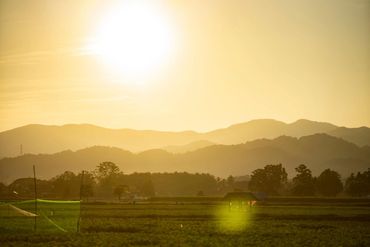
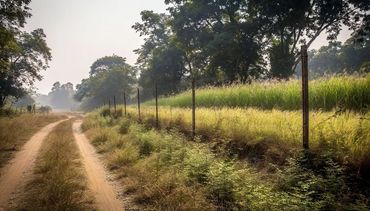
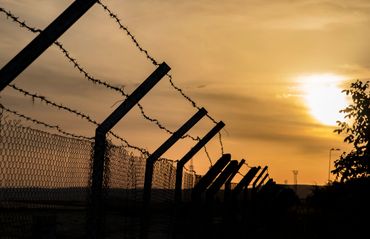
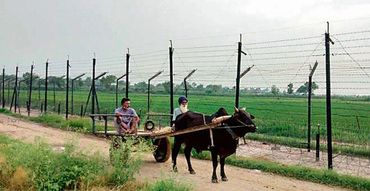
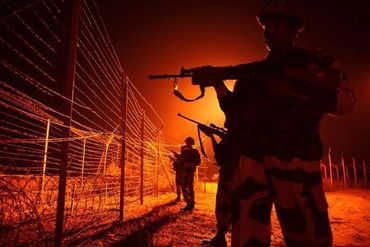
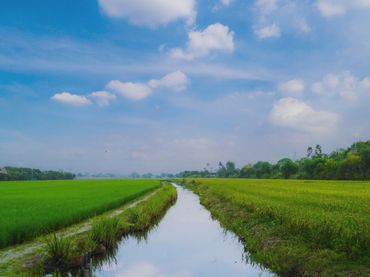
be set in real locations along the border. I am interested in capturing the textures of
this world, open fields, fences, rivers, stillness of rural life. Performances will be
minimal and internal. For me, this film is not about making a political statement,
but about showing the human condition in a political space. It is about how people
continue to feel, dream, and connect, even when systems divide them.
Location: Fulbari-Banglabndha Border. Siliguri Chicken Neck
Visual Language

Though there is pain, the film feels playful, tender, and full of hope.
Shot in real locations near the Indo-Bangla border: paddy fields, mud roads, small homes, riverbanks, open land.
Nature is always present, like a silent witness.
Camera stays close to characters, simple and observant.
Handheld in many scenes for a real, lived feeling.
Wide frames to show land and invisible borders.
Sound is important: wind, insects, animals, distant voices, border sounds.
Music is ambient and light: mix of Bengali and tribal folk with soft synth.
World feels real: worn clothes, used spaces, nothing stylised.
Magic realism is subtle, the hen feels real, not fantasy. The miracle happens simply, without drama.
Focus on small actions, silences, and real reactions.
When and How?
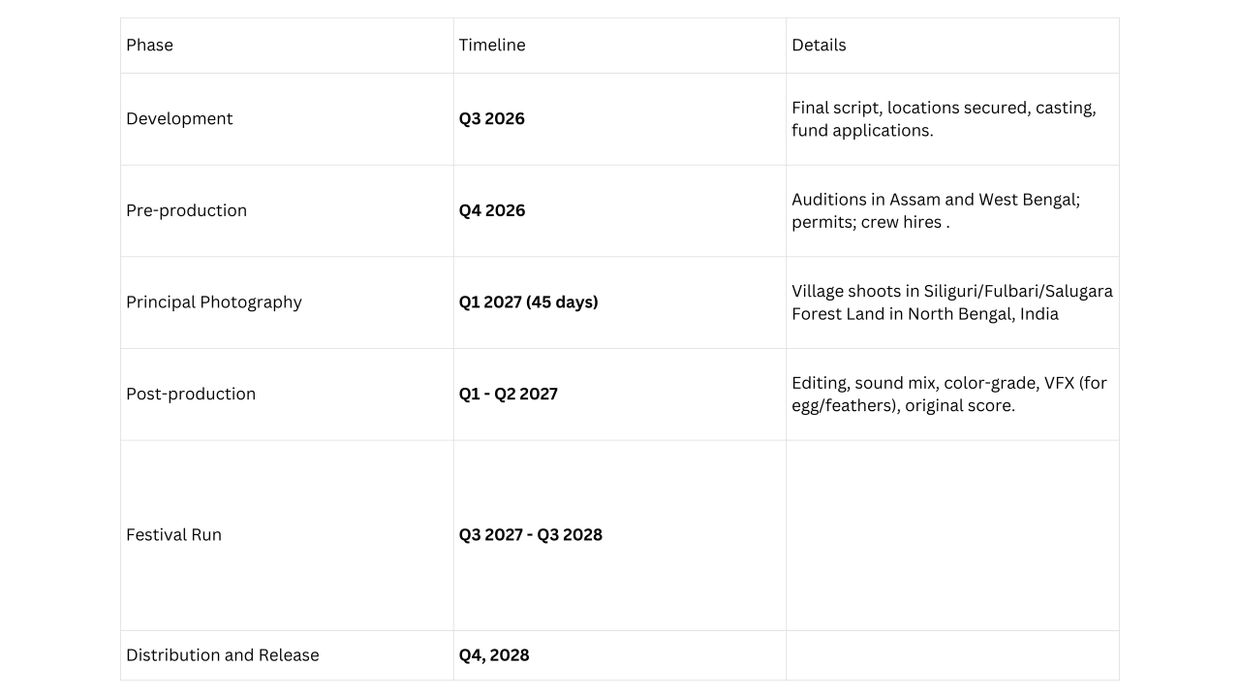

Writer, Director, Producer
Prithviraj Das Gupta
Prithviraj Das Gupta is an Indian filmmaker. His film Green Blackberries premiered at IFFI and Dharamshala, winning UNESCO Best Children’s Film (2021). Clinton won the World Competition at UNICA Korea. His work streams on Apple TV and Amazon Prime. He also won a Promax Asia Gold Award for an International trailer.

Producer
Tanveer Hossain
Tanveer Hossain is a Bangladeshi producer and Executive Director of Green Screen. His film The Wrestler won Busan’s New Currents Award (20x23). He produced ALI, earning Bangladesh’s first Cannes recognition (2025), and co-produced Radikals (Cannes Critics’ Week 2024).

DP & Co-Producer
Prateek Pamecha
Prateek is an Indian Cinematographer, an alumni of Film and Television Institute of India and Busan Film Academy. His short film 'Catdog' won 23rd Cinéfondation at Cannes.

Actor, Co-Producer
Kamil Sheikh
Kamil Shaikh is an Indian actor, writer, and director. His debut feature The Investigator, which he wrote, directed, and produced, earned international festival recognition across Europe, including awards and Best Actor honors.

Writer, Associate Director
Maharshi Tuhin Kashyap
Maharshi Kashyap is an Indian filmmaker from Assam and an SRFTI graduate. His short The Horse from Heaven was India’s Oscar entry and won at VGIK and Bengaluru. His debut feature Kok Kok Kookkook premiered at the Busan International Film Festival (Vision Asia), marking him as a strong emerging voice in Asian cinema.